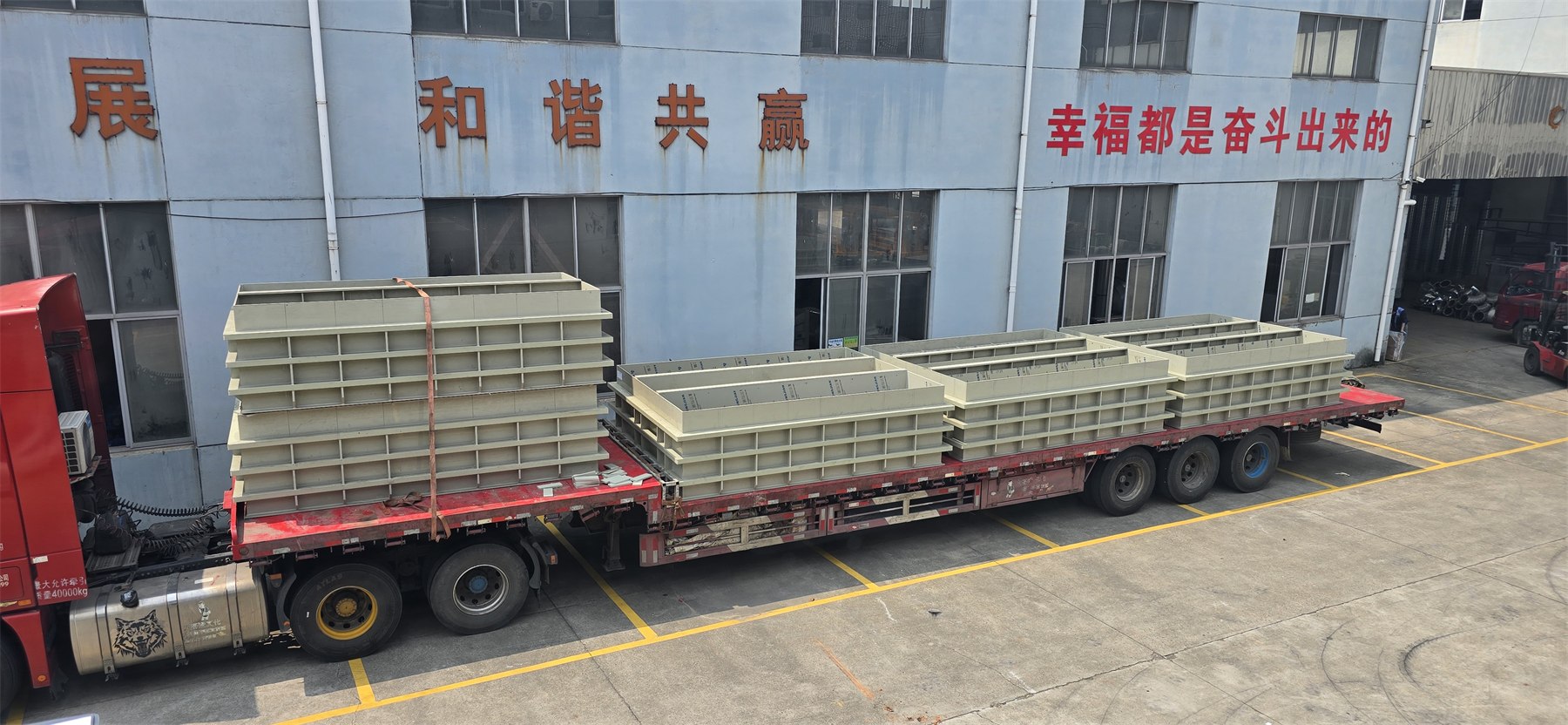
Choosing a plating tank material is a process-and-structure decision, not a shortcut based on the word PP. Polypropylene may be suitable for some wetted applications, but it is not a universal answer for every chemistry, temperature profile, exposure duration, loading condition, or support arrangement. A tank that survives a short test can still need a different design for continuous industrial service.
For procurement and engineering teams, the safest starting point is to split the question into two parts: what touches the solution and what carries the tank and its operating loads. The two parts interact, but they should not be treated as the same material decision.
Separate wetted materials from external structure
The wetted layer, liner, fittings, covers, seals, and drains are exposed to the bath. Their selection depends on the actual chemistry and the way the tank is used. The external frame, supports, braces, access platforms, and lifting points have a different job: they control deflection, stability, service access, and the load path to the floor or supporting structure.
A material can be chemically acceptable at a surface while the complete tank arrangement still needs better support. Conversely, a strong external frame does not make a wetted material compatible. State both selections on the project drawing and identify which party is responsible for reviewing each one.
Review the full exposure, not a catalogue limit
Compatibility depends on more than temperature alone. Record the bath chemistry, concentration range, operating and upset temperatures, exposure duration, cleaning method, possible contamination, and expected mechanical loads. Thermoplastic selection guidance can help screen candidates, but laboratory plasticware data is not an industrial tank design basis. A small laboratory container and a welded process tank do not have the same geometry, support, heat history, circulation, or consequences of deformation.
Use the supplier’s compatibility information as an input to engineering review, not as a blanket approval. Ask what conditions were evaluated, whether the information covers the intended concentration and duration, and whether the component includes a seal, weld, threaded fitting, or other material with a different behavior. Where the condition is outside the supplier’s stated experience, mark it for confirmation instead of filling the gap with a generic temperature claim.
Make mechanical loads part of the material discussion
Tank contents create a sustained load. Racks, bars, heaters, piping, covers, and maintenance activities add local or moving loads. Thermal cycling can also affect joints, supports, and alignment. The design review should consider how the load transfers through the tank, welds, frame, and floor support, and what happens when the tank is full, partly drained, or temporarily out of service.
Welded joints deserve their own inspection plan. Review joint layout, access for inspection, areas around penetrations, support transitions, and any signs of distortion or leakage during commissioning. Do not assume that a stated sheet or liner material automatically confirms the quality of every weld or the stiffness of the complete assembly.
Use a material-selection worksheet
| Question | Why it matters |
|---|---|
| What solution contacts the surface? | Different chemistries and concentrations can change compatibility; a generic PP label is incomplete. |
| What temperature profile is expected? | Review normal, start-up, cleaning, and upset conditions rather than relying on one nominal value. |
| How long is the exposure? | Short contact, continuous service, and repeated cycling may lead to different selection conclusions. |
| What is outside the tank wall? | Supports, frames, covers, fittings, and seals may need separate materials and load reviews. |
| Where are the welds and penetrations? | These locations need practical inspection, access, and leak-check planning. |
| What loads must the structure carry? | Contents, racks, piping, service activity, and floor support influence the complete design. |
Clarify evidence before approving the tank
Request a drawing that identifies wetted materials, external supports, joints, penetrations, and service clearances. Pair it with the process conditions and the basis for compatibility review. If the supplier has not received a final chemistry, concentration, temperature, or duty cycle, keep the item open as a project assumption. This protects the buyer from turning an early material suggestion into an unqualified operating guarantee.
A useful next step is to send the confirmed chemistry, concentration range, exposure profile, support drawing, and weld-inspection questions to Raymond (Changzhou) Equipment Co., Ltd. for a project review. The Raymond equipment solutions and copper plating line pages provide context, while the engineering team and site contractor must still confirm the tank design before fabrication or operation.